

Stepping up efforts to bring the war in Ukraine to an end, US President Donald Trump has “greenlit” a new sanctions bill targeting Russia and its key trading partners, a move that could have serious implications for countries such as India.
Republican Senator Lindsey Graham confirmed that Trump has approved a bipartisan Russia sanctions bill and said lawmakers could vote on it as early as next week. Speaking to reporters, Graham described his meeting with the President as productive and said the legislation would strengthen Washington’s ability to pressure Moscow.
“After a very productive meeting today with President Trump on a variety of issues, he greenlit the bipartisan Russia sanctions bill. I look forward to a strong bipartisan vote, hopefully as early as next week,” Graham said.
According to the senator, the bill would empower Trump to penalise countries that continue to purchase discounted Russian oil, which he said helps sustain President Vladimir Putin’s war effort. India, which has significantly increased its imports of Russian crude since the conflict began, could be among the countries affected.
In August 2025, Trump announced an additional 25 percent tariff on Indian goods as a “penalty” for India’s purchase of Russian oil. China and Brazil could also come under scrutiny under the proposed legislation, echoing Trump’s earlier warnings to BRICS nations.
What the bill proposes
The legislation, titled the Sanctioning Russia Act of 2025, is designed to take action against individuals and countries deemed by the US President to be acting at Russia’s direction or obstructing efforts to secure a peace agreement in Ukraine.
Under the bill, sanctions could be imposed if a person or country is found to be:
-
Refusing to negotiate a peace agreement with Ukraine
-
Violating a negotiated peace agreement
-
Launching another invasion of Ukraine
-
Attempting to overthrow, dismantle, or undermine the Ukrainian government
If any of these conditions are met, the President would be authorised to impose a wide range of penalties, including visa restrictions and tariffs of up to 500 percent.
The bill also calls on the US Treasury Department to impose property-blocking sanctions, while the Commerce Department would be directed to ban the export, re-export, or in-country transfer of US-produced energy or energy products to or within Russia.
What it could mean for India
India is already facing elevated US tariffs. During Trump’s “Liberation Day” initiative in 2025, Washington renewed and expanded trade penalties on several US trading partners, triggering fresh trade disputes.
India was initially hit with a 25 percent tariff. Months later, Trump announced an additional 25 percent levy, citing India’s continued purchase of Russian oil as a factor “fueling the war in Ukraine.” This pushed the total tariff burden on Indian goods to 50 percent, placing India alongside Brazil among the countries facing the highest US tariffs.
As 2026 began, Trump hinted at the possibility of further tariff hikes on India, again linking the issue to New Delhi’s energy ties with Moscow. Speaking to reporters aboard Air Force One, he said the decision would depend on India’s actions.
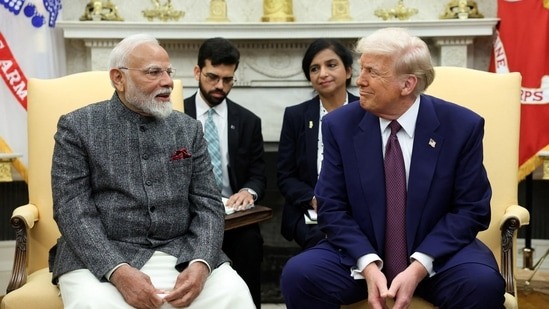
“Modi is a good guy. He knew I was not happy, and it was important to make me happy,” Trump said, adding that India trades with Russia and that the US could “raise tariffs on them very quickly.”
If the proposed bill becomes law, the stakes could rise significantly. The legislation would require the President to impose tariffs of at least 500 percent on all goods and services imported into the United States from countries that knowingly engage in trade involving Russian-origin uranium or petroleum products.