

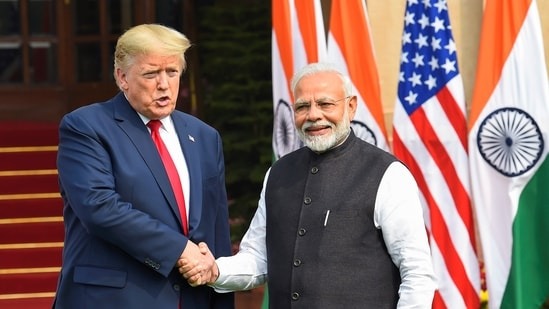

India and the United States have finalised an interim trade deal that will reduce tariffs on Indian exports to a final rate of 18 per cent. Union Commerce Minister Piyush Goyal, sharing details of the agreement, described the framework as a “historic milestone” in strengthening the partnership between the two countries.
A major highlight of the interim framework is the sharp reduction in US tariffs on Indian goods. Earlier, India was facing tariffs of up to 50 per cent, which included a 25 per cent penalty imposed over New Delhi’s purchase of Russian oil. Under the new agreement, these duties will now be brought down significantly.
Key takeaways from the India–US interim trade framework:
-
Tariffs will be lowered on both sides. The United States has agreed to reduce its tariffs on Indian goods to a final rate of 18 per cent. In return, India will remove or reduce tariffs on a wide range of US industrial, food and agricultural products.
-
Once the framework is implemented, the US will also withdraw reciprocal tariffs on key Indian exports such as pharmaceuticals, gemstones and diamonds, and aircraft components.
-
Both countries have agreed to address non-tariff barriers affecting trade in medical devices, agricultural products, and information and communication technology (ICT) goods.
-
India will take steps to ease trade barriers for US medical devices and eliminate restrictive import licensing procedures that delay market access or impose quantitative restrictions on American ICT products.
-
Within six months of the agreement coming into force, India will assess whether US-developed or internationally recognised standards can be accepted for American exports entering the Indian market.
-
India has also committed to reviewing long-standing non-tariff barriers affecting US food and agricultural exports.
-
As part of the framework, and as announced by US President Donald Trump on Truth Social, India will purchase $500 billion worth of US energy products, aircraft and aircraft parts, metals, coal and technology goods over the next five years.
-
Digital trade will form a key pillar of the agreement, with both countries working to address discriminatory or burdensome practices impacting cross-border digital commerce.
-
India and the US will also focus on boosting trade in advanced technology products such as graphics processing units (GPUs) for data centres, while expanding joint cooperation in the technology sector.
-
The framework allows for adjustments to commitments if there are changes in tariffs imposed by either country. Both sides will also work towards expanding market access through negotiations for a broader bilateral trade agreement (BTA).
-
During these negotiations, the US has affirmed that it will consider its existing tariffs on Indian goods and explore options to reduce or eliminate them.