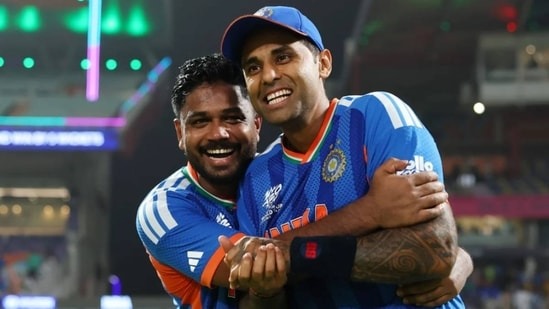


A crushing defeat in Ahmedabad on Sunday brought back painful memories for the thousands at the Narendra Modi Stadium — and especially for Suryakumar Yadav. His expression after falling to Corbin Bosch off the very first ball of the 10th over captured the mood. Keshav Maharaj then sealed India’s fate with a triple strike in the 15th over.
For the Indian captain, the déjà vu ran deeper. At the same venue on November 19, 2023, he had been dismissed for 18 in the ODI World Cup final loss to Australia. Sunday’s setback reopened old wounds.
That defeat in 2023 had sparked a period of reflection that led to India’s unbeaten runs in the 2024 T20 World Cup and the 2025 Champions Trophy. Now, with that streak broken and semifinal qualification in doubt, another phase of introspection is required.
No Panic, But Smart Adjustments
India still have two Super 8 fixtures left, starting with Zimbabwe in Chennai on February 26. The squad has already reached Chennai and will resume training on Tuesday.
The question is whether drastic changes are needed. If the disappointing 2021 campaign taught India anything, it is that overhauls in moments of pressure can backfire. What is needed now is tactical recalibration, not structural panic.
Is It Time for Sanju Samson?
Opponents have repeatedly exploited India’s vulnerability against off-spin early in the innings. In the last three matches, India have lost a wicket in the very first over to spin — twice Abhishek Sharma and once Ishan Kishan, all for ducks.
Zimbabwe are likely to follow the same blueprint, possibly opening with Sikandar Raza or Brian Bennett if India persist with two left-handed openers.
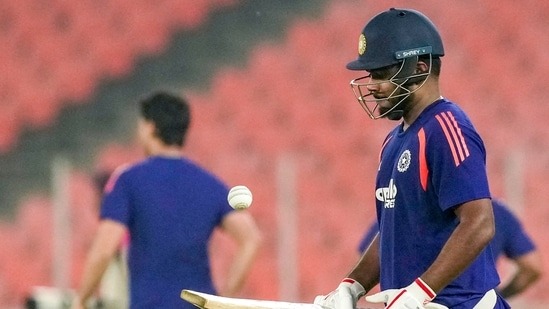
This is where Sanju Samson could be vital. His only outing in the tournament came against Namibia, where he smashed 22 off just eight balls in Abhishek’s absence.
Introducing a right-hander at the top would disrupt Zimbabwe’s plans. If spin opens the attack, Samson can take strike. If they pivot to pace through Blessing Muzarabani, Abhishek’s natural aggression can counter.
What About Ishan Kishan?
If Samson returns, Ishan could shift to No. 3 — though that would mean a difficult decision regarding Tilak Varma, who has scored 107 runs off 90 balls at a strike rate of 119, with a highest score of 31.
Ishan has experience at No. 3, including a century and a 32-ball 76 in the home series against New Zealand. He also fills that role for Sunrisers Hyderabad in the IPL.
However, his promotion should depend on the match situation to preserve the left-right combination. Suryakumar may have to bat earlier than usual, but more importantly, he must anchor the innings amid recurring early collapses. He will also need to handle Zimbabwe’s pace pair, Muzarabani and Brad Evans, who thrive on hard lengths and clever variations.
If the Chennai surface offers turn, Shivam Dube could be promoted to No. 5 to exploit spin in the middle overs.
Axar or Sundar?
India’s defeat against South Africa was not down to one selection call. Washington Sundar’s inclusion made sense against a left-heavy Proteas top order. But Zimbabwe could field as many as five right-handers in their top seven, making Axar Patel a more suitable option for this contest.
A Bowling Plan B Is Essential
India’s strong group-stage performances were built on disciplined bowling. However, when Varun Chakravarthy had an off day, there was no backup plan. David Miller and Dewald Brevis capitalised, wresting control during the middle overs.
A second attacking spin option is necessary. Kuldeep Yadav, who has played only once — returning 1 for 14 in three overs against Pakistan — could be that solution.
Reverting to the combination used against Pakistan — Axar, Kuldeep and Varun as the spin trio, supported by Jasprit Bumrah, Hardik Pandya and Dube in the pace department — would restore balance and wicket-taking threat.
Above all, India must avoid panic. Clarity of roles, calculated tweaks and composure under pressure will determine whether they can regain momentum and keep their World Cup hopes alive.