

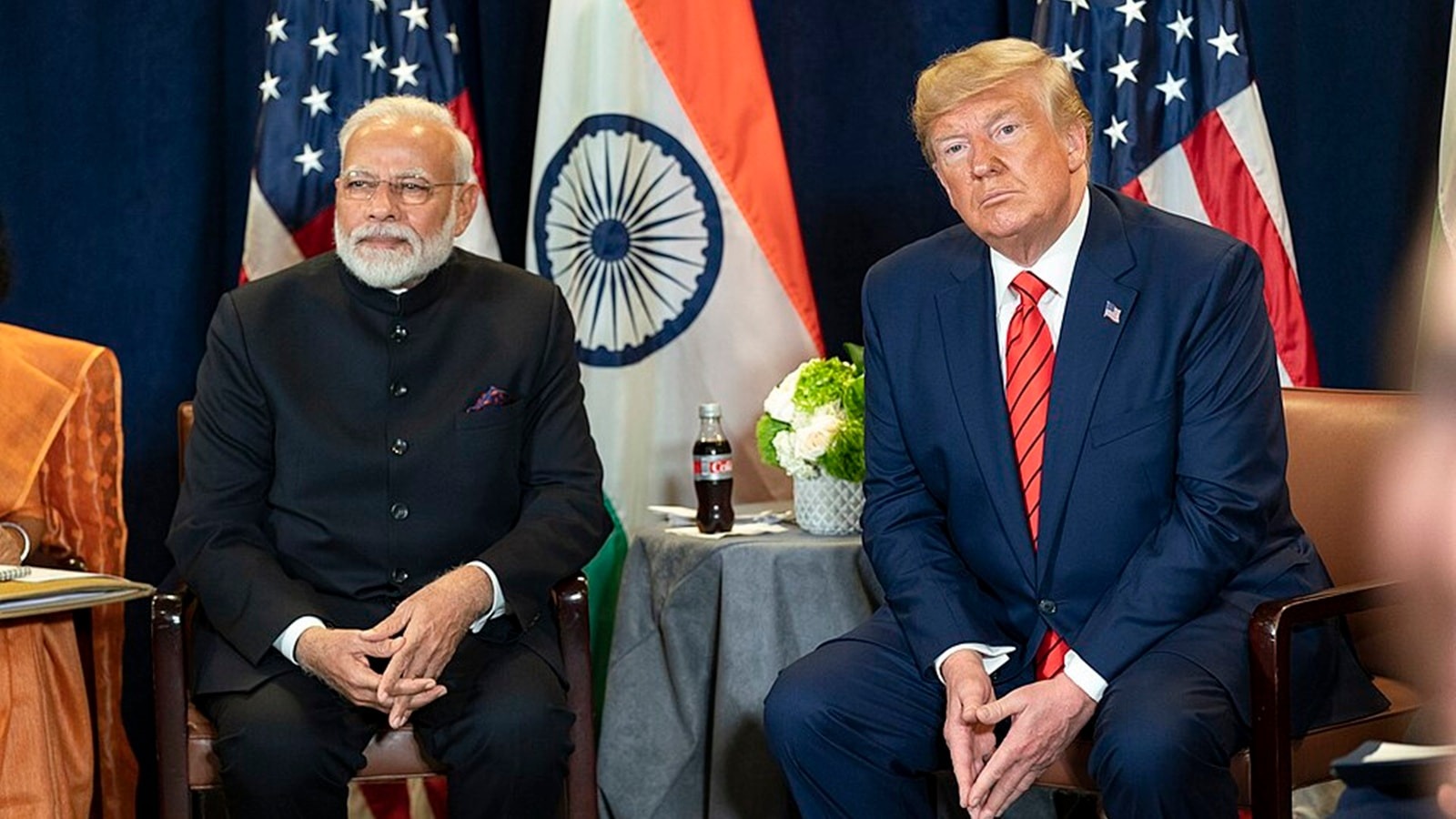

New Delhi is weighing the pros and cons of US President Donald Trump’s invitation to India to join the proposed Board of Peace for Gaza, a key element of his Gaza peace plan.
The invitation also figured in Prime Minister Narendra Modi’s discussions with visiting UAE President Sheikh Mohamed bin Zayed Al Nahyan, underscoring the regional and diplomatic sensitivities surrounding the proposal.
India has so far adopted a cautious approach to the Middle East conflict, mindful of its vital interests in the region, including energy security and the welfare of nearly nine million Indians living there. Trump’s offer has presented New Delhi with a complex set of challenges — from the implications of refusing the invitation and the risk of undermining the primacy of the United Nations, to questions over the scope of the board’s mandate, the stance of other major powers, the prospect of Pakistan’s participation, and concerns about Trump’s long-term commitment to the initiative.
Despite its reservations, India is under pressure to treat the invitation seriously. Officials note that a refusal could be perceived as a diplomatic slight by a mercurial US president who has framed the board as a “bold new approach to resolving global conflict.”
To begin with, India is already facing trade headwinds, including the possibility of tariffs of up to 50% from the US. Compounding matters, New Delhi has not endorsed Trump’s claims of brokering the recent India-Pakistan ceasefire. Any further friction could invite additional consequences, making the Gaza proposal a delicate issue in bilateral ties.
Second, India is carefully assessing whether the proposed peace board could challenge the existing international framework, particularly the central role of the United Nations. New Delhi is wary of endorsing any parallel mechanism that might dilute the UN’s authority. The current draft charter of the board appears to extend beyond Gaza, adding to India’s unease — especially at a time when India-US relations remain strained by Trump’s assertions regarding South Asia.
Third, New Delhi is closely watching how other key countries respond. Major powers such as Russia, the United Kingdom and Germany have yet to commit, while France has indicated it is unlikely to join.
Kremlin spokesperson Dmitry Peskov said Russian President Vladimir Putin had received the invitation and was “studying the details,” seeking clarity on “all the nuances” through diplomatic contacts with Washington.
UK Prime Minister Keir Starmer said Britain was consulting allies on the proposal and stressed the importance of advancing the second phase of the Gaza peace plan. While London has not confirmed whether it has formally accepted the invitation, Starmer said the UK had “indicated willingness to play our part.”
French presidency sources said Paris was examining the proposal with its partners but did not intend to respond favourably at this stage. “The charter goes beyond the sole framework of Gaza and raises major issues, particularly regarding respect for the principles and structure of the United Nations, which cannot under any circumstances be called into question,” the sources said. France reiterated its commitment to a ceasefire in Gaza and to a credible political horizon for both Palestinians and Israelis, emphasising its support for effective multilateralism.
Germany said it would first assess what contribution it could realistically make towards a lasting resolution of the Gaza conflict. A German government spokesperson stressed that the UN remains the “central multilateral framework” for Berlin, particularly in a time of unprecedented global crises.
European Commission spokesperson Olof Gill confirmed that Commission President Ursula von der Leyen had also received an invitation and would consult EU leaders on the proposal. While no decision has been announced, Gill said the Commission wants to contribute to a comprehensive plan to end the Gaza conflict.
Meanwhile, Israeli Prime Minister Benjamin Netanyahu’s office said the formation of the board had not been coordinated with Israel and was “contrary to its policy,” without elaborating. Israel has not been invited to join the committee, unlike Turkey, one of its key regional rivals.
Indian officials say New Delhi is factoring in these international responses and believes any decision must be coordinated with close partners.
Fourth, there is concern within the government that Pakistan’s inclusion would make it politically and diplomatically difficult for India to stay out of the board.
Fifth, Trump’s reliability is a major consideration. There is apprehension that if the US president loses interest or faces resistance, he could simply disengage from the initiative, potentially leaving India and other regional players tied to a structure without Washington’s backing. Questions also remain about the board’s future once Trump’s term ends.
Sources emphasised that India will not rush its decision and will respond only after carefully weighing all these factors in the days and weeks ahead.