

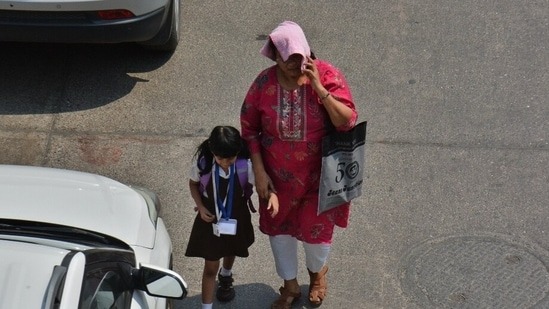

India recorded its first widespread heatwave of 2026 on Wednesday, with severe conditions sweeping across parts of western India, particularly in Saurashtra and Kutch. Weather experts say the early arrival of intense heat reflects a growing trend where the transition period between winter and summer is shrinking, a pattern increasingly linked to climate change.
According to the India Meteorological Department (IMD), heatwave to severe heatwave conditions were reported at many places in Saurashtra and Kutch and at several locations across the Gujarat region. Isolated heatwave conditions were also observed in Vidarbha. While Vidarbha had already experienced isolated heat earlier this month, Wednesday marked the first widespread heatwave episode affecting large parts of western India this year.
Meteorologists attribute the intense heat to an anti-cyclone forming over Rajasthan, which is pushing dry and hot winds toward Gujarat. Mahesh Palawat explained that the weather system is causing subsidence of air over the region, leading to rising temperatures. He noted that such patterns have become increasingly common in late March in recent years.
Palawat also highlighted the rapid disappearance of the spring season in India. “Spring is almost over. The transition from winter to summer is becoming very quick,” he said, pointing to a clear trend observed in recent years.
Maximum temperatures ranged between 38°C and 42°C at many locations across Gujarat, western Rajasthan and Vidarbha. Several areas in Madhya Pradesh and Marathwada also reported high temperatures, while isolated pockets of Chhattisgarh and Odisha recorded similar conditions. In Delhi, daytime temperatures ranged between 35°C and 38°C.
Day temperatures were markedly above normal in several regions. Parts of Haryana, Delhi, and both western and eastern Rajasthan recorded temperatures more than 5.1°C above the seasonal average. Many places in Punjab and Gujarat also reported significantly higher-than-normal temperatures. Appreciably above-normal temperatures — between 3.1°C and 5°C higher than usual — were recorded in areas such as Sub-Himalayan West Bengal, Sikkim, parts of Madhya Maharashtra and Coastal Karnataka.
M. Mohapatra said that heatwave conditions in March are not unusual and had been forecast earlier by the department. IMD expects heatwave to severe heatwave conditions to continue over Gujarat until March 13. Meanwhile, isolated heavy rainfall is likely in Arunachal Pradesh between March 12 and 14, and in Assam and Meghalaya between March 13 and 15.
The IMD defines a heatwave when the maximum temperature in the plains reaches 45°C or when the temperature is at least 4.5°C higher than the normal average.
Experts warn that the early onset of extreme heat could place significant pressure on India’s power infrastructure. The summer of 2026 may be as intense as, or even harsher than, 2024 — which was recorded as the warmest year in India and globally — potentially driving electricity demand to new highs.
This concern comes at a time when India’s energy imports are under pressure. The country relies on overseas suppliers for about 85% of its oil and gas needs, and recent geopolitical tensions involving Iran, the United States and Israel have disrupted energy supplies. A petroleum ministry official said around 25% of India’s current gas requirements have been affected.
According to projections by Grid India, peak electricity demand between April and June could exceed 260 gigawatts. Disha Agrawal said the country had already reached 250 gigawatts in May 2024 and could see demand rise to between 267 and 280 gigawatts this summer.
A recent assessment by Grid India identified the period from April to July 2026 as the most critical for electricity supply due to rising demand, reduced surplus capacity and potential outages. During this time, surplus margins may remain close to zero, particularly during non-solar hours when solar power generation is unavailable.
In such situations, gas-based electricity — though contributing a relatively small share of overall power generation — becomes vital for balancing the grid and meeting peak demand.