

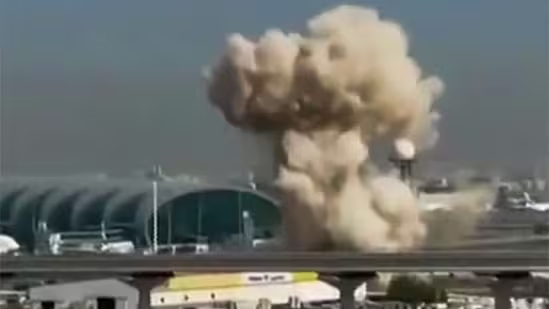

The United Arab Emirates Ministry of Defence stated on Tuesday that Iran has launched 304 ballistic missiles, 15 cruise missiles, and 1,627 kamikaze drones at the UAE since February 28. Most of these were intercepted by the country’s missile defence systems.
Earlier in the day, an oil field in Abu Dhabi was struck by an Iranian projectile, prompting authorities to temporarily shut down airspace. Although the frequency of attacks has decreased, Iran has reportedly made major UAE cities like Dubai, Abu Dhabi, and Sharjah key targets, given the country’s growing status as a financial hub in the Middle East.
Iran’s Islamic Revolutionary Guard Corps (Islamic Revolutionary Guard Corps) has defended the strikes, accusing the UAE of backing US military efforts and participating in the Abraham Accords. Analysts suggest that targeting high-profile locations like Dubai also amplifies global attention and bolsters Iran’s narrative across the region, where anti-US and anti-Israel sentiment has been deeply entrenched due to conflicts linked to Palestine and Gaza.
Despite growing anger within the UAE leadership over being drawn into the conflict, the country lacks the offensive capability to strike Iran’s missile bases located deep within mountainous regions such as the Zagros and Alborz ranges. Reports indicate that Gulf nations, including the UAE, may be relying on the United States for retaliation against Iran.
Now into its 18th day, Iran’s response—reportedly linked to the assassination of its Supreme Leader—has slowed in intensity but is expected to continue through March. By targeting Gulf nations and Israel, Iran appears to be signalling that US security guarantees in the region are weakening, while pressuring these countries to reconsider hosting American military assets or face continued attacks and economic disruption, particularly around the Strait of Hormuz.
While Gulf economies face significant risks from prolonged instability, Iran’s strategy appears focused on enduring US and Israeli military pressure to claim a symbolic victory. Experts warn that unless internal political change occurs in Iran, the IRGC may continue using asymmetric warfare tactics, potentially extending operations into areas like the Red Sea and deploying proxy forces via the Quds Force against US and Israeli interests.
Even if the current conflict subsides, the long-term political trajectory of the Middle East may be further destabilized, with shifting alliances and heightened regional tensions.