

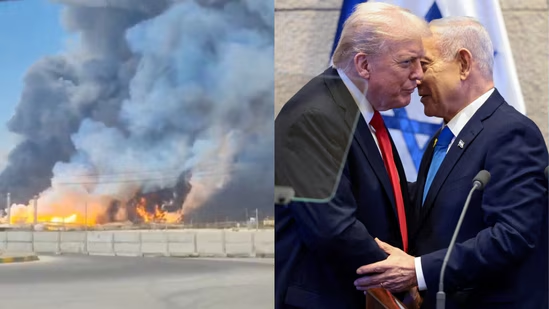

Israel’s strike on the South Pars gas field, one of Iran’s most critical energy assets, has significantly escalated tensions in an already volatile conflict, sending ripples across the global economy. Iran retaliated by targeting energy infrastructure elsewhere in West Asia, driving up oil and gas prices and exposing differences between Donald Trump and Benjamin Netanyahu over Israel’s actions.
Unlike previous strikes aimed at exports, this attack hit the core of Iran’s domestic energy system. The South Pars field—part of the world’s largest natural gas reserve—supplies the majority of Iran’s internal energy needs, making it vital for electricity generation and heating in a country that often struggles with power shortages.
What is South Pars and where is it located?
The South Pars gas field is the largest natural gas field in the world, shared between Iran and Qatar. It is known as South Pars on the Iranian side and the North Field on the Qatari side. Spanning roughly 9,700 square kilometres, it lies near Iran’s southern coastal city of Asaluyeh.
Why South Pars is crucial for Iran
Iran relies heavily on natural gas, ranking among the world’s top consumers despite a smaller economy. Gas is widely used for heating due to the country’s colder climate, and much of it is subsidised. South Pars alone accounts for nearly 80% of Iran’s gas supply. In 2024, Iran produced about 276 billion cubic metres of gas, with most of it consumed domestically. The field also supports exports to neighbouring Iraq, which depends on Iran for a significant share of its electricity and gas needs.
Iran’s retaliation: Ras Laffan attack
In response, Iran struck Qatar’s Ras Laffan Industrial City, home to the world’s largest LNG production facility. Located about 80 km from Doha, Ras Laffan produces around 20% of global LNG supply, making it critical for energy markets in Asia and Europe.
The facility had already been shut following earlier attacks and was hit again, worsening concerns about long-term supply disruptions. Qatar has reportedly reduced exports by about 17%, with potential losses estimated at $20 billion annually. Repairs could take years.
Impact on India
The conflict poses serious concerns for India, which imports over 88% of its crude oil and about half of its gas. Qatar is India’s largest LNG supplier and a major LPG source, accounting for a significant share of imports.
Any prolonged disruption at Ras Laffan could tighten supply and push up energy costs in India. Even if tensions ease, the extent of damage and repair timelines will determine how quickly supplies stabilize.
Trump–Netanyahu differences
The strike has also highlighted a divide between Trump and Netanyahu. Trump publicly opposed the attack, stating he had advised against targeting the gas field. Netanyahu, however, maintained that Israel acted independently, though he later agreed to avoid further strikes on such critical infrastructure.
Despite attempts to downplay tensions, reports suggest the US was informed in advance, indicating coordination—though not complete agreement—between the two allies.